



If you’re reading this, chances are you’re either already familiar with NAD+ and its rising role in cellular health, or you’re someone who’s started shopping for NAD supplements and noticed 1000mg doses everywhere. As a supplier of NAD+ products, I get asked a lot: “What makes a high-quality NAD 1000mg different from the stuff that just says ‘NAD’ on a label?” The short answer is quality control—not just a single step, but a full chain of checks that starts long before the powder reaches a bottle and doesn’t stop until it’s in the hands of someone who’s using it. Today, I want to pull back the curtain on how we ensure every 1000mg NAD+ product we send out is safe, pure, and actually delivers what it promises.
First, let’s get one thing straight: not all NAD is created equal. A lot of lower-cost NAD products cut corners on raw material sourcing. Some use synthetic NAD that’s not derived from a natural precursor, or they source their powder from uncertified manufacturers who don’t track purity. For us, the first quality control checkpoint starts with raw material selection—because if the base ingredient is flawed, nothing else we do will fix it. Our NAD+ 1000mg is made from pharmaceutical-grade nicotinamide riboside (NR), a precursor that’s been shown in clinical studies to boost NAD+ levels in the body more reliably than some other forms. We don’t just take a supplier’s word that their NR is pure; we require every batch of raw powder to come with a Certificate of Analysis (COA) that lists test results for purity, potency, and contaminants. We even go a step further and do independent third-party testing on every raw material shipment ourselves. That means we send a sample of the NR powder to an ISO-accredited lab to test for things like heavy metals, residual solvents, microbial contamination, and, most importantly, actual NAD+ content. For a 1000mg NAD+ supplement, the raw material should have a minimum of 99% purity—anything lower is a red flag, because that extra 1% could be fillers or additives that don’t belong in a product designed for cellular health.
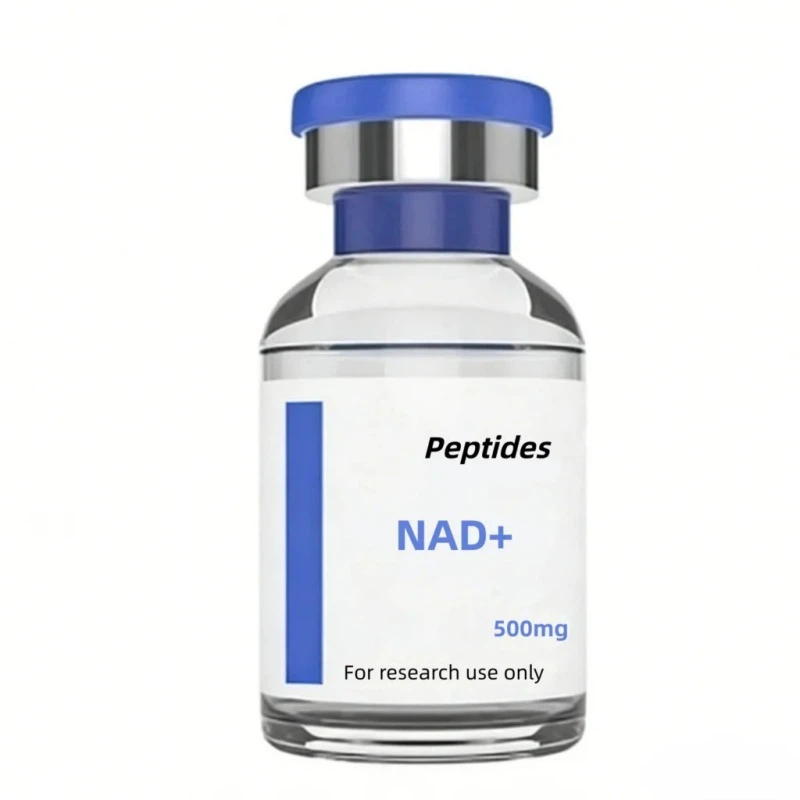
I often hear from customers who ask why they should choose a 1000mg dose over smaller options like the NAD+ 500mg Vials Powder Peptide available here, and that’s a fair question. The dose depends on individual needs, but what’s non-negotiable is that whatever dose you choose, it has to be accurately measured. That’s the next big part of quality control: manufacturing accuracy. When we’re producing 1000mg NAD+ vials (or powder, or sublingual tablets, depending on the format), we have to ensure that every single unit has exactly 1000mg of active NAD+. It sounds simple, but it’s not. Over time, machinery can drift, so we run calibration checks on our weighing and mixing equipment every single day of production. We also use a controlled environment in our manufacturing facility—temperature and humidity are monitored 24/7, because NAD+ is sensitive to moisture and heat. If it gets too humid, the powder can clump, which makes accurate dosing impossible; if it’s too hot, the NAD+ can degrade, losing its potency. We also avoid unnecessary additives and fillers in our products, because each extra ingredient is another potential variable in quality. Some manufacturers add fillers to cut costs, but we keep our NAD+ formulations as clean as possible—so our 1000mg dose only has NAD+ and a tiny amount of stabilizer to protect it during storage.
Once the product is manufactured, we have another round of testing to confirm that the final dose matches our specifications. This is called finished product testing, and it’s critical for catching mistakes that might have slipped through earlier checks. For a 1000mg NAD+ batch, we test 10 random units from the production run to measure actual NAD+ content. We also test for contaminants again, because even if the raw material was pure, the manufacturing process could introduce something unexpected—like dust from the facility or residue from cleaning agents. We also check for dosage accuracy: if we label a vial as 1000mg, it can’t be 950mg or 1050mg consistently. These tests are done by that same ISO-accredited lab we work with, so we have an independent verification of every batch. If a batch doesn’t pass these tests, it’s not shipped. Period. We’ve had batches that passed our internal checks but failed third-party testing, and those batches were destroyed. It’s a tough call, but it’s the only way we can stand behind our products.
Storage and packaging are another part of quality control that many people overlook. NAD+ is unstable when exposed to light and air, so how we package our 1000mg vials matters a lot. We use amber glass vials with air-tight rubber stoppers and aluminum seals—these keep light and oxygen out, which prevents the NAD+ from degrading. We also package each vial with a desiccant packet to absorb any moisture that might get trapped during packing. We test our packaging every few months, too: we leave test vials on shelves under controlled light and humidity conditions for several weeks, then test the NAD+ potency to make sure it doesn’t drop below 98% of the labeled amount. That’s how we ensure that when a customer buys a 1000mg NAD+ vial, whether it’s today or six months from now when they use it, it’s still potent and pure. We also track the expiration date on every batch, so we never sell products that are past their usable date.
Transparency is also a big part of our quality control process. We don’t hide our test results from customers. If you buy a 1000mg NAD+ product from us, you can request the COA for that specific batch—just send us a message, and we’ll send it over. A lot of manufacturers don’t do this, because they don’t want customers to see that their products have fillers or low purity. But for us, being open is the only way to build trust. The NAD+ 500mg Vials Powder Peptide link I mentioned earlier? That page has COAs for every batch of that product, too, and it’s the same standard we apply to all our NAD+ doses, including the 1000mg ones. If you ever look at a COA for our products, you’ll see lines that list “NAD+ Potency” at over 99%, “Heavy Metals” below the FDA’s limit, and “Microbial Count” within safe ranges. There are no blank spaces or unlisted tests—because we know you’re putting this into your body, and you deserve to know exactly what’s in it.
I also want to talk about what quality control isn’t. It’s not just passing a single test at the end. It’s a continuous process. We review every batch’s test results quarterly to look for trends. For example, if we notice that a certain raw material batch has slightly lower purity than the previous one, we talk to our supplier and work with them to fix it, or we switch to a different supplier if needed. We also listen to customer feedback. Over the years, customers have told us that some lower-quality NAD+ products give them no noticeable benefit, or even give them mild side effects like headaches. We believe that’s because those products either have low potency or they have contaminants that the body doesn’t react well to. Our quality control process is designed to make sure that our 1000mg NAD+ products deliver on their promise: to support cellular energy, help with recovery, and promote overall wellness, without any unnecessary side effects.
Another common misconception is that higher doses like 1000mg are less safe than smaller doses. That’s only true if the quality control is bad. A proper 1000mg NAD+ dose is well-studied in clinical trials—research has shown that doses up to 1000mg are safe for most adults, as long as the product is pure and accurately dosed. The problem comes when manufacturers make 1000mg doses with impure powder, or with fillers that can cause adverse reactions. Our quality control process includes safety testing, too. We test every batch for known allergens (like gluten, soy, and dairy) to make sure our products are safe for people with common sensitivities. We also follow all FDA and GMP (Good Manufacturing Practices) guidelines for supplements, because we believe that regulatory standards are a baseline, not a goal. We go above and beyond those standards whenever we can, because your health is worth that extra effort.
So, to circle back to the original question: What is the quality control of NAD 1000mg? It’s not a single test or a piece of paper. It’s sourcing raw materials from trusted, certified suppliers and verifying every shipment. It’s calibrating manufacturing equipment daily to ensure accurate dosing, and working in a controlled environment to protect the NAD+ from degradation. It’s testing every final batch with independent labs to confirm potency, purity, and safety. It’s packaging products to keep them stable until you use them, and being transparent with every test result. It’s a process that we care about deeply, because when you choose our NAD+ products, you’re trusting us with your health.
If you’re looking to add a high-quality NAD+ 1000mg product to your wellness routine, or if you have questions about our quality standards, we’d love to talk to you. We work with individuals, clinics, and wellness providers, and we’re happy to answer any questions you have about our products, our testing processes, or bulk pricing for wholesale orders. Reach out to our team to start a conversation about what we can offer.
References

- Canto, C., Menzies, K. J., & Auwerx, J. (2015). NAD+ Metabolism in Aging and Disease. Cell Metabolism, 21(2), 179–192.
- Elhassan, Y. S., et al. (2018). Nicotinamide Riboside Improves Insulin Sensitivity in Overweight Adults: A Randomized Controlled Trial. Cell Metabolism, 27(3), 576–587.e5.
- U.S. Food and Drug Administration. (2023). Current Good Manufacturing Practice (CGMP) for Dietary Supplements. Retrieved from FDA.gov
- International Organization for Standardization. (2022). ISO 17025: General Requirements for the Competence of Testing and Calibration Laboratories.
- Trammell, S. A., et al. (2016). Nicotinamide Riboside Increases NAD+ in Humans. Cell Metabolism, 23(2), 327–334.